

Inside Apple’s App Store Algorithm
What Sparked the Update
This all comes in response to a new law from the European Union called the Digital Markets Act (DMA). The goal of the law is to make digital platforms more fair and transparent. Because Apple plays such a major role in the app ecosystem, the EU labeled it a “gatekeeper.” Apple must now follow stricter rules for how the App Store operates and how it treats developers.
What Apple Revealed
Following these new rules, Apple published a document called Store Services Tiers that explains how apps get promoted in the App Store. It lays out two fee levels for developers: Tier One and Tier Two. Apps in Tier Two get better visibility, including spots in search suggestions, personalized recommendations, and promotional placements. Apps in Tier One, however, only show up in the basic listings and don’t get these extra promotional benefits. Although they didn’t reveal the exact ranking factors, the document makes it clear that app quality, user engagement, and compliance with App Store guidelines still matter a lot.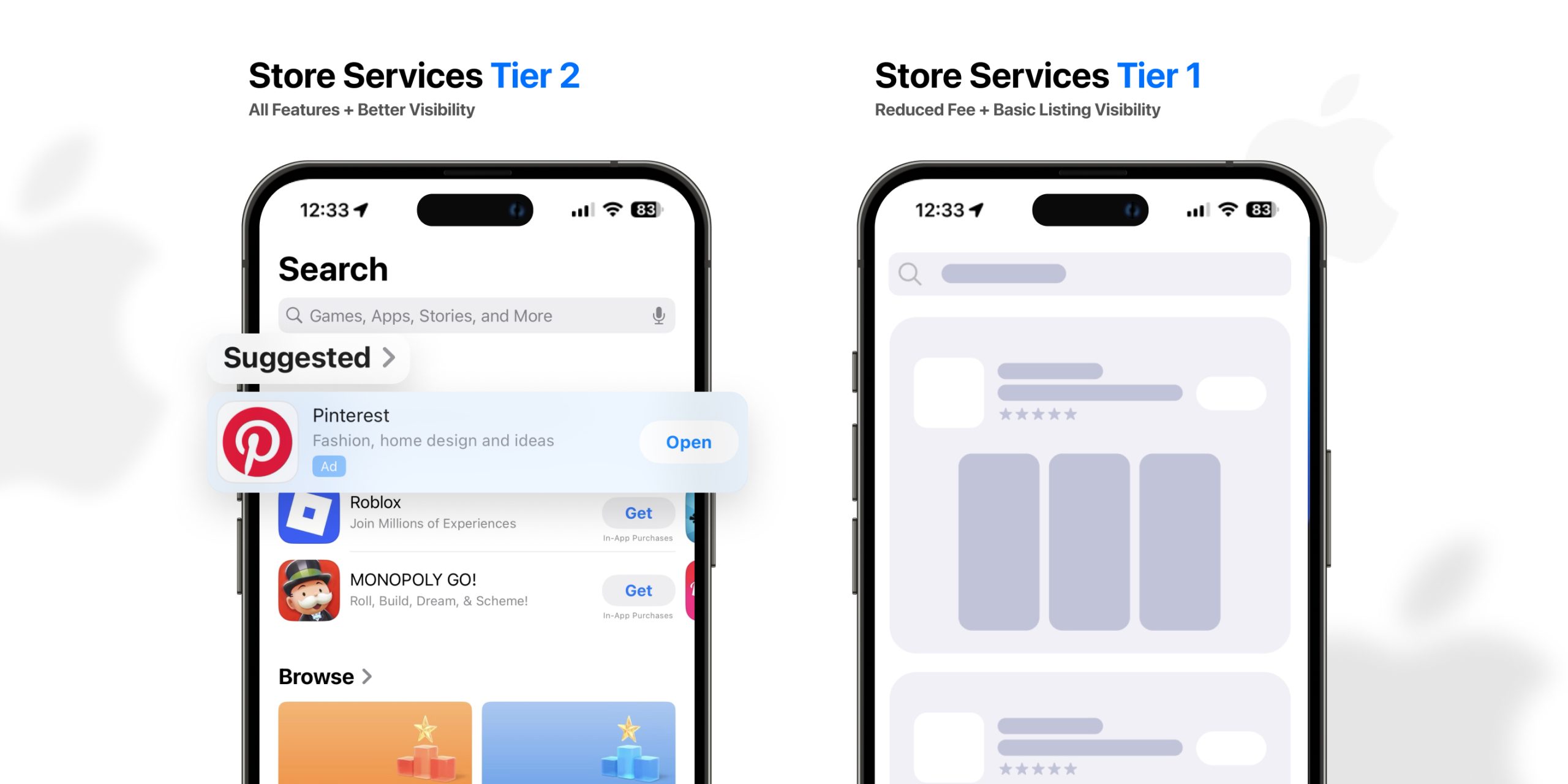
Responding to the Changes
Developers should start by checking which tier the app is currently in. Then think about whether moving to Tier Two makes sense based on business goals and budget. The algorithm doesn’t just reward apps that pay for more exposure. It still values apps that are relevant, highly rated, and keep users coming back. The App Store will continue to change before 2026, so it’s important to follow what’s new.